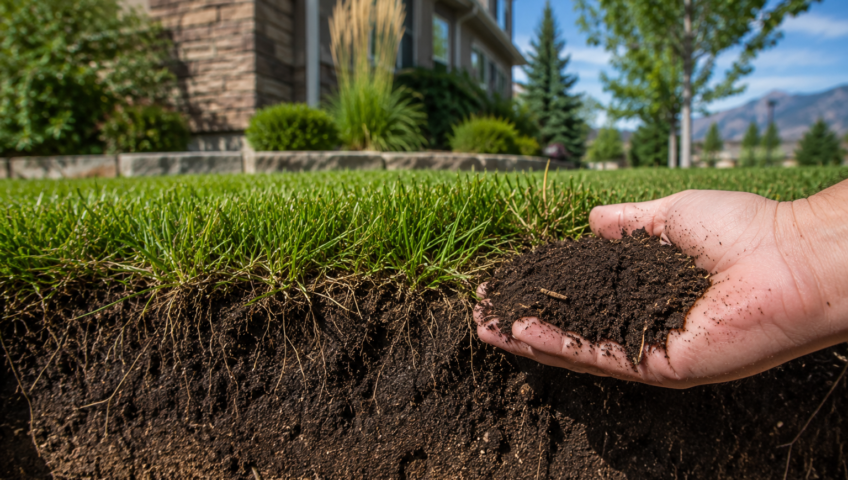
When homeowners think about landscaping, they often focus on grass, plants, irrigation systems, and curb appeal. However, one of the most important parts of a healthy landscape is something many people never see — the soil underneath it all.
Healthy soil directly impacts lawn growth, plant health, drainage, irrigation efficiency, and long-term landscape performance. Poor soil conditions can lead to weak grass, drainage issues, compacted ground, plant stress, and higher maintenance costs over time.
According to the United States Department of Agriculture (USDA), healthy soil improves water retention, supports plant growth, reduces erosion, and helps landscapes become more resilient to weather and environmental stress. (usda.gov)
WHY SOIL HEALTH MATTERS
Soil does much more than simply hold plants in place. Healthy soil provides:
- Nutrients for plant growth
- Proper drainage and moisture retention
- Oxygen flow to roots
- Support for beneficial microorganisms
- Improved drought resistance
- Better lawn density and color
Without proper soil conditions, even well-watered and fertilized landscapes can struggle to stay healthy.
COMMON SOIL PROBLEMS IN COLORADO
Many properties throughout Colorado face unique soil challenges due to climate and natural soil composition. Common issues include:
- Clay-heavy soil
- Soil compaction
- Poor drainage
- Low organic matter
- Dry, nutrient-deficient conditions
- Erosion from wind and runoff
Clay soils, in particular, can become extremely hard when dry and overly saturated when wet, making proper grading, aeration, and soil preparation especially important.
SIGNS OF UNHEALTHY SOIL
Homeowners may notice several warning signs when soil health is declining:
- Thin or patchy grass
- Standing water after rain
- Dry spots despite watering
- Slow plant growth
- Increased weeds
- Hard, compacted ground
- Excessive runoff or erosion
These problems are often connected to soil conditions rather than simply watering or mowing habits.
HOW TO IMPROVE SOIL HEALTH
Professional landscaping maintenance can significantly improve soil performance over time. Common soil improvement methods include:
- Core aeration
- Compost and organic material incorporation
- Proper irrigation management
- Mulching
- Soil grading and drainage correction
- Seasonal fertilization
- Reducing soil compaction
The USDA Natural Resources Conservation Service also notes that increasing organic matter in soil improves water infiltration and moisture retention while supporting healthier plant growth. (nrcs.usda.gov)
HEALTHIER SOIL CREATES A STRONGER LANDSCAPE
A beautiful landscape starts below the surface. Healthy soil creates stronger root systems, greener lawns, healthier plants, and more efficient irrigation performance while helping landscapes better withstand drought and seasonal weather changes.
At RH Landscape & Maintenance, we help homeowners throughout Northern Colorado improve long-term landscape health through proper lawn care, irrigation management, drainage solutions, seasonal maintenance, and professional landscape services designed to support healthier outdoor environments year-round.